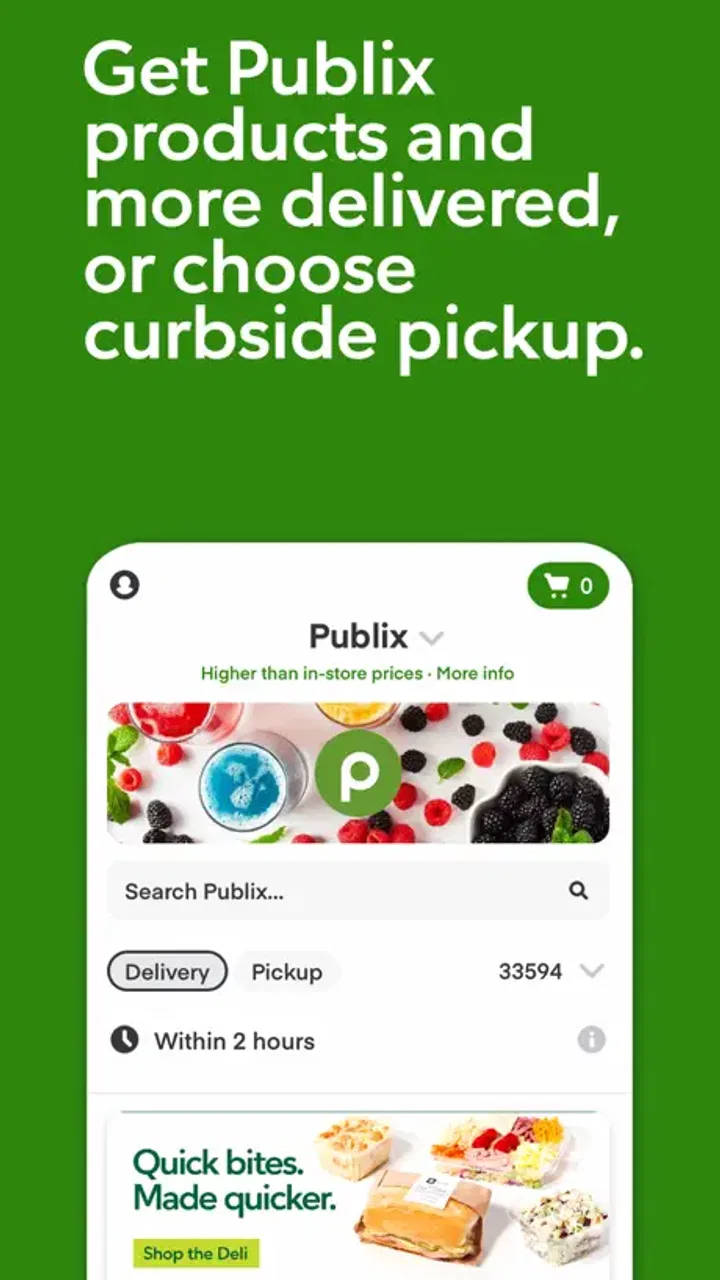
Publix Delivery & Curbside
- 4.7
- Rating
- 1.00M
- Installs
- Free
- Price

 Analysis by App-foxy
I use grocery delivery apps when the weekly shop is too large for a quick store visit, when my schedule is tight, or when I simply do not want to push a cart through the aisles. Publix Delivery & Curbside is designed for that exact situation. It is a Food & Drink app from Publix Super Markets Inc. that lets me arrange groceries through a digital shopping experience powered by Instacart, with delivery to my door as the central idea.
What makes it worth considering is not that it tries to be an all-purpose marketplace. Its usefulness comes from connecting the Publix shopping experience with a delivery workflow. I can look for the items I normally buy, build an order from my phone, and choose a more convenient way to receive it when that option is available for my location. That focus makes the app easier to understand than a broad grocery platform, although it also means the service is most appealing to people who already shop at Publix or have a nearby participating store.
How the app fits into a real grocery routine
On my first pass through the app, I would treat it less like a recipe tool and more like a remote version of a Publix shopping trip. The important task is finding products, checking the order, and arranging fulfillment without spending time in the store. The interface is most useful when I already have a reasonably clear list. If I know I need milk, vegetables, breakfast items, snacks, and household basics, I can work through that list from home instead of relying on memory while walking between aisles.
You May Also Like

 Blood Strike: 2.5 Anniversary
Blood Strike’s Loadouts Turn Every Drop Into a Tactical Gamble
A close look at Blood Strike’s custom loadouts: how fast access to signature weapons reshapes its battle royale rhythm, rewards preparation, and narrows the gap between fights.

 Pandora - Music & Podcasts
Pandora’s Music Is Easy to Start, but Harder to Recover
Pandora’s strength is its low-effort path from a seed to a station. Its weak spot is how much confidence it asks you to place in connection, setup, and quiet recovery.

 8 Ball Pool
 Is Built on Rivalries, Rematches, and Routine
A close look at the rivalries, rematches, shared routines, and unanswered safety questions that turn a quick pool match into a persistent mobile community.

 Samsung Music
’s Quiet Strength Is Playing What You Already Own
Its reach comes less from spectacle than from dependable access to a personal library. That simplicity is both the app’s strongest retention engine and its ceiling.

 AccuWeather: Weather Radar
AccuWeather Review: A Quick, Clear Forecast for Everyday Decisions
For everyday plans, the best forecast is the one you can understand quickly. AccuWeather makes rain timing, radar, and local conditions easy to act on, with a few trade-offs.

 Hill Climb Racing
Why Hill Climb Racing Still Turns Crashes Into One More Run
A tiny car, a bumpy hill and one more upgrade: Hill Climb Racing keeps resurfacing because its simple chaos makes every near-miss feel personal.
More From Our News Desk
View All News


That distinction matters because grocery apps can become frustrating when they encourage browsing without helping me finish the actual shop. Publix Delivery & Curbside makes more sense when I use it with a prepared list, a repeat weekly routine, or a specific meal plan. I find that approach reduces impulsive additions and makes it easier to notice whether I have forgotten an essential item before placing the order.
The app is free to install and is suitable for Everyone. That tells me the basic barrier to trying it is low: I do not have to purchase the app before discovering whether it suits my area and shopping habits. The free access should not be confused with a promise that every order-related cost is free, however. The app itself has no listed purchase price, while the final cost of a grocery order can depend on the fulfillment choices and checkout details shown for that order. I would always inspect the final screen rather than assuming delivery has the same cost as visiting the store.
Publix Super Markets Inc. is the developer, and the app has reached over a million installs with a 4.7 average from around thirty-nine thousand ratings. Those figures suggest that it has become a familiar option for many Publix shoppers, but popularity does not remove the practical questions I would ask before relying on it. Is my address served? Are the products I need available? Is the total acceptable after the order details are shown? Those checks matter more to me than the rating alone.
Delivery and curbside are different kinds of convenience
The delivery route is the obvious choice when I want the groceries brought to my home. It is especially useful after work, during a busy family day, or when carrying bags from a store would be difficult. I can place the order earlier and use the waiting period to handle other tasks. For someone without easy transportation, that convenience can be more meaningful than a simple time saving.
Curbside serves a different purpose. I still need to travel to the store, but I can avoid entering, searching for products, and waiting through the normal shopping process. That makes it a good middle ground for me when I am already driving nearby but do not have time for a full shop. It can also be preferable when I want more control over the handoff than a home delivery provides.
I would not treat the two choices as interchangeable. Delivery is better when the trip itself is the problem. Curbside is better when the store is convenient but the shopping process is the problem. Thinking about that difference before building the basket helps me choose the service for the right reason instead of selecting the first option that appears.
A practical weekly-shopping workflow
A useful routine starts outside the app. I make a short list divided into sections such as produce, chilled items, pantry goods, and household supplies. Then I search for each item rather than scrolling through the entire catalog. Search is usually faster for familiar products, while browsing is more useful when I want ideas or need to compare several versions of the same item.
After adding everything, I review the basket slowly instead of rushing to checkout. I look for duplicate items, missing quantities, and products that may be easy to confuse with a smaller or larger package. This is one of the most important habits with any digital grocery order: a product that looks right in a small result card may not be the exact size or variety I intended to buy.
I also separate “must have” items from flexible ones in my own notes. If a particular ingredient is essential for dinner, I want to notice any substitution or availability issue before the order is finalized. If I am buying snacks or general pantry items, I can be more flexible. This simple distinction makes the order easier to adjust and prevents a minor product change from disrupting a planned meal.
For recurring shopping, I would keep a personal list of the items I buy most often, even if that list is maintained outside the app. That gives me a reliable starting point each week. It also helps me detect price or package changes because I am comparing the same household needs rather than browsing randomly. The app handles the order, but a little preparation on my side makes the experience much more dependable.
Where the value comes from
The strongest value is time recovered. A normal grocery trip includes travel, parking, walking through the store, searching for products, waiting, and carrying everything home. Delivery can remove most of those steps, while curbside can remove the browsing and checkout portion. I would not measure the benefit only by the number shown at checkout; I would also consider how much a missed errand disrupts my day.
For a parent managing children, a remote worker between meetings, or someone caring for a family member, that saved effort can justify choosing the app even when a store visit might be cheaper in a particular situation. The value is also practical for larger orders. Carrying a full weekly shop is inconvenient, and delivery changes the physical part of the task into a scheduling decision.
The app is also valuable for people who prefer shopping from a written plan. In a store, it is easy to forget whether an item is already in the cart or to add products because they are visible. On a phone, I can review the basket as a list and remove items before submitting the order. That does not automatically make the order inexpensive, but it can make my spending more deliberate.
Another useful benefit is the ability to decide between receiving the order at home and collecting it near the store. I do not have to use delivery every time. On a week when I am already passing a Publix location, curbside may be the more sensible choice. On a week when leaving home is difficult, delivery may provide the greater benefit. Having both fulfillment styles in the same shopping flow gives the app more flexibility than a service built around only one kind of handoff.
There is a psychological benefit too. I find it easier to shop when I can pause and reconsider an item before committing. A physical store encourages quick decisions because I am standing in an aisle and trying to keep moving. A phone-based basket gives me a clearer moment to check the total, remove extras, and think about whether a product is genuinely needed. That is a small feature of the workflow, but it can improve the quality of a weekly order.
What the free app does and does not prove about value
Because the app is free, trying it does not require an upfront purchase. That is a genuine advantage for someone who is curious about digital ordering or wants a backup option for busy days. The meaningful value question comes later, when I compare the completed order and its fulfillment details with the cost and effort of shopping in person.
I would not describe the app as automatically cheaper than visiting Publix. A delivery order may involve costs or conditions presented during checkout, and the convenience itself is what I am paying attention to. If the goal is the lowest possible grocery total, I would compare the final amount carefully and consider whether curbside or an ordinary store visit better fits that goal.
For me, the best value appears when the alternative is a missed shopping trip, an expensive last-minute purchase, or a long journey made only to collect a few essentials. In those situations, the free app is a useful tool even if the service is not the cheapest possible route for every basket.
Tradeoffs I noticed before depending on it
The biggest limitation is that the experience depends on local availability. A delivery-focused app is only helpful when my address and nearby store can support the chosen service. Even when the service is available, the products I want may not be available in the same way as they are during an in-person visit. I would therefore test the app with a small, non-urgent order before making it my only grocery method.
Digital product selection also has an unavoidable weakness: I cannot inspect fresh food with my own eyes before receiving it. For packaged goods, this is rarely a serious concern. For produce, bakery items, or other products where appearance and ripeness matter, I may prefer to shop personally. That does not make the app unsuitable, but it changes which parts of my grocery list I feel comfortable ordering remotely.
Substitutions require judgment as well. A replacement may be perfectly acceptable for a flexible pantry item and completely wrong for a recipe, allergy concern, or dietary preference. I would review the available choices carefully and avoid treating every substitute as equivalent. If a particular brand, flavor, size, or ingredient is essential, an in-person trip can offer more certainty.
There is also a difference between planning an order and reacting to a sudden need. The app works best when I have enough time to search, review, and choose a fulfillment window or pickup arrangement. If I need one item immediately, walking into the nearest store may be faster. Delivery is a planning tool, not a universal replacement for an urgent errand.
Compared with a general grocery marketplace, Publix Delivery & Curbside has a narrower identity. That focus is helpful if Publix is my preferred store because I do not have to compare unrelated retailers in the same catalog. On the other hand, someone who wants to compare prices across multiple supermarkets may get more flexibility from a broader grocery service. I would choose this app for store loyalty and convenience, not for cross-retailer comparison.
Compared with shopping directly in the Publix store, the app gives me a cleaner list-based process but less immediate control over product inspection. Compared with a standard delivery marketplace, it feels more relevant to a Publix-centered routine but less useful if I regularly divide my shopping between several chains. The right choice depends on whether consistency with one retailer matters more than maximum selection.
Small habits that make the experience more reliable
I recommend checking the basket twice: once for quantity and once for suitability. The first pass catches forgotten basics or accidental duplicates. The second asks whether each product will actually work for the meal or household task I had in mind. This is especially helpful when search results show several similar package sizes.
I would also avoid building an important dinner around a single hard-to-replace item unless I have a backup plan. If that ingredient is unavailable or changed, the delivery can still arrive but the meal may not work. Keeping one alternative recipe or a substitute ingredient in mind makes remote grocery shopping less fragile.
For curbside orders, I would combine pickup with another planned trip rather than driving out only for a very small basket. The convenience comes from reducing time inside the store, but the journey still exists. For delivery, I would choose it when avoiding that journey has real value, such as a packed schedule, poor weather, or a heavy order.
Finally, I would keep the app updated. The current version is 9.30.0, and it supports devices running Android 8.0 or later. That makes it accessible on many older Android phones, although anyone using an older device should still check compatibility before relying on it for a time-sensitive order. Keeping the application current is sensible because ordering tools depend on stable account, catalog, and checkout behavior.
Who will get the most from it
This app is a strong match for regular Publix shoppers who want to move part or all of their weekly routine onto a phone. It is particularly useful for people who know the products they buy, value a predictable store relationship, and want delivery or curbside without learning a completely different retailer’s system.
It also suits households that alternate between fulfillment methods. One week I might choose delivery because the grocery list is large and my schedule is crowded. The next week I might choose curbside because I am already near the store. That flexibility is more useful than a service that forces me into one habit.
People with limited mobility may find the delivery option especially valuable, provided the service is available for their address and the final order details work for their budget. The same applies to caregivers and anyone recovering from an illness or injury. In these cases, the app is not merely a convenience; it can reduce the physical effort required to keep a household supplied.
I would be less enthusiastic about recommending it to someone who frequently compares several supermarkets, needs to inspect fresh products personally, or wants the absolute lowest total on every order. A store visit or a broader comparison service may suit those priorities better. I would also hesitate to make it the only option for someone who often needs groceries immediately, since delivery depends on planning and local service conditions.
My verdict on choosing Publix Delivery & Curbside
After looking at the complete workflow, I see Publix Delivery & Curbside as a practical convenience app rather than a replacement for every kind of grocery trip. Its free installation makes experimenting easy, and its focus on Publix keeps the experience relevant for shoppers who already prefer that retailer. The combination of home delivery and curbside pickup gives me two ways to reduce the effort of a normal shop.
The tradeoff is that convenience does not guarantee the lowest final cost or the exact product selection I would get by walking through the store myself. I need to check the order carefully, think about substitutions, and confirm the checkout details. Fresh-food preferences, urgent purchases, and cross-store price comparison are situations where another approach may be better.
My recommendation is simple: if Publix is already your regular supermarket and you want a reliable way to avoid some in-store trips, I think this app is worth trying. Start with a manageable order, compare delivery with curbside, and learn which items you are comfortable buying remotely. If you value personal product selection more than saved time, keep shopping in person and use the app only as a backup.
For my own routine, the deciding factor is not the app’s price because the app itself is free; it is whether the completed order saves enough time and effort to justify the chosen fulfillment option. Used that way, Publix Delivery & Curbside is a focused, useful addition to a Publix shopper’s toolkit, especially on the weeks when convenience matters more than making one more trip to the store.
FAQs for Publix Delivery & Curbside
01What is Publix Delivery & Curbside, and how does it work?
Publix Delivery & Curbside lets you shop for groceries through the Publix app or website instead of walking through the store. You can search for products, add items to your cart, choose either home delivery or curbside pickup where available, select a time slot, and pay during checkout. Availability, fees, and pickup options depend on your location and the participating store.
02Is Publix Delivery & Curbside available everywhere?
No. Delivery and curbside pickup are not available at every Publix location or in every ZIP code. After entering your address or selecting a store, the app will show which services and time slots are currently offered. Coverage can also vary by day, demand, store inventory, and local delivery capacity, so it is worth checking availability before building a large order.
03How much do Publix delivery and curbside pickup cost?
The total cost can include your groceries, delivery or service fees, taxes, and any applicable tip. Curbside pickup may have different fees from delivery, while promotional offers or membership benefits can sometimes reduce certain charges. The app displays the estimated total before you place the order. Product prices, substitutions, minimum order requirements, and fees may vary by location and service.
04Can I request substitutions or make changes to my order?
Publix orders may allow substitutions when a selected item is unavailable, although the exact controls can depend on the service and ordering platform. You may be able to approve alternatives, reject substitutions, or leave notes for shoppers. It is important to review your order carefully before checkout, because replacement products can change the final price and some unavailable items may simply be removed.
05What should I know about delivery times, pickup, and order problems?
Delivery and curbside orders use scheduled time windows, but busy periods, weather, traffic, or inventory issues can affect timing. For curbside pickup, follow the app’s instructions when you arrive and be prepared to confirm your vehicle details if requested. If an item is missing, damaged, incorrect, or charged unexpectedly, contact Publix or the ordering provider promptly using the available support options.
Pros
- Easy scheduling for grocery delivery or curbside pickup
- Digital receipts make it simple to track previous purchases
- Shopping lists help organize recurring household essentials
- Order updates keep you informed about preparation and pickup status
- Publix product selection includes fresh bakery
- deli
- and prepared foods
Cons
- Delivery availability and time slots vary by store and location
- Service
- delivery
- or small-order fees may increase the total cost
- Substitutions can differ from the items originally selected
- Fresh-produce quality may be harder to judge when ordering remotely
- Some products may be unavailable online despite being stocked in-store

Publix Delivery & Curbside
Gallery